
IPS for Select clients: from trustee objectives to portfolio implementation
Tom Wiseman
 Insights
A practical guide to the five-stage Select client lifecycle, from objectives evaluation through to first review meeting, and what the trustee and beneficiaries should expect to see along the way


Tom Wiseman
CEO
Tom is the Chief Executive Officer of Enhance Group overseeing our multi-jurisdictional Monitor and Select solutions from our Jersey headquarters.
View all insights
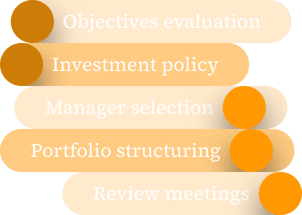
Trustees who have decided that Select is the right answer for their beneficiaries often pause at the practical question of how to make the move. The pause is reasonable: transitions involve real operational risk, out-of-market periods, transaction costs, tax events, and the disruption of established relationships. The fear is not of the destination; it is of the journey. The five client lifecycle stages below are not cosmetic milestones. Each carries specific work, deliverables and decision points for the trustee. Together they form a documented governance trail. That trail satisfies the trustee’s ongoing fiduciary duty just as much as it manages the operational mechanics of the transition. A typical onboarding takes between one and two months, from the start of stage 01 to the conclusion of stage 04, depending on the complexity of the trustee’s arrangements.

Out-of-market exposure is the most concrete operational risk in any transition. If a portfolio is sold and reinvested over a short period during which markets move materially, the trustee bears that gap. The Investment Consultant’s job during portfolio structuring is to minimise that exposure where possible. This means staggering executions where appropriate, taking advantage of natural liquidity events, and considering tax-relevant timing where the trustee’s professional advisers have flagged it. It also means making sure the trustee understands the trade-offs where the exposure cannot be wholly avoided. Where existing positions can be transferred in-specie rather than sold and repurchased, that route is used by default, since it removes the out-of-market gap and the associated transaction costs entirely. Not every position qualifies, however. Restricted stock, illiquid holdings, and positions the platform partner cannot accept in-specie will still need to be sold and reinvested. The Investment Consultant sets the trustee’s expectations on this at the outset of stage 04, rather than leaving it to be discovered during execution.
The trustee’s board, Investment Committee and beneficiaries are entitled to see a documented, evidenced governance trail at each stage. That trail runs from the written objectives summary after stage 01, to the signed IPS after stage 02, to the trustee-approved portfolio recommendation with rationale after stage 03. It continues with the implemented portfolio in Connect, with the transition itself documented as a governance event, after stage 04, and the regular Monitor reviews and review-meeting outputs after stage 05. Each is a deliverable the trustee’s board can include in its own governance reporting. Together they satisfy the duty to take proper advice, the duty to review investments, and the documentation requirements of the trustee’s broader fiduciary obligations.
The move from a traditional investment management arrangement to Select is a managed transition, not a leap of faith. The five-stage journey is structured to produce a documented governance trail at each stage, and to manage the operational mechanics, in-specie transfers, transition timing, tax-relevant sequencing, responsibly. The destination is a different kind of investment governance arrangement. The journey is a managed sequence of approvals, deliverables and documented decisions.
Sign-up for the latest news and insights from Enhance, delivered direct to your inbox.