Connect integrations: how trustees eliminate duplicated investment admin
Tom Wiseman
 Insights
How independently verified, double-entry investment data turns trust bookkeeping from a manual cost centre into an integrated, auditable feed


Tom Wiseman
CEO
Tom is the Chief Executive Officer of Enhance Group overseeing our multi-jurisdictional Monitor and Select solutions from our Jersey headquarters.
View all insights
Investment data does not arrive at trust companies in a consistent format. Every custodian uses a different file structure; every manager numbers its transactions differently; every fund administrator describes corporate actions in its own dialect. The trust company’s accounting system, on the other hand, expects a single consistent feed: standardised security identifiers, standardised currency codes, standardised transaction types, mapped into the chart of accounts the trust uses. Bridging the gap is what the finance team spends the quarter doing, and it is what creates most of the audit exposure that follows.
The translation work is time-consuming, error-prone and audit-exposed. Every manual re-keying introduces the possibility of a typo. Every reformat introduces the possibility of a mis-mapping. Every reconciliation produces a small queue of breaks that have to be investigated before the ledger can be closed. The cost is borne twice: once by the finance team that spends hours each quarter on translation and reconciliation, and again at audit, where the manual process attracts scrutiny and findings. None of this is exotic, and none of it is necessary. The data exists in machine-readable form at the manager. The translation problem is one of plumbing, not of principle.
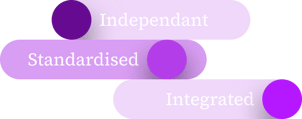

The scale of Connect’s bookkeeping data layer reflects the breadth of the trust industry it serves. Connect carries holdings and transactions data on more than 25,000 investment securities, sourced from an ever-growing number of investment counterparties. Each feed has been independently verified before it lands. Each security has been mapped to the double-entry bookkeeping standard. Each transaction has been encoded to be exportable into any accounting system.
Connect Bookkeeping is included in the standard Monitor fee. There is no separate charge for the data, no per-portfolio bookkeeping fee, no transaction-volume pricing and no additional charge for the integration into your accounting system. The double-entry data set is delivered alongside the quarterly review report, populated automatically into ecosystem partner platforms (see Connect integrations), or made available via the Connect API for trust companies running proprietary systems. What used to be a manual cost centre becomes a by-product of the investment monitoring service the trustee already pays for.
| Feature | What’s delivered |
| Independent verification | Holdings and transactions verified before landing inside Connect. |
| Double-entry standard | Universal, transaction-level mapping that works in any accounting system. |
| Open architecture | No restrictions on the type or location of investment counterparties. |
| Integration ready | Ecosystem partnerships and API for custom integrations. |
| Cost | Included free as part of the Monitor service. No double-charging. |
Investment bookkeeping is broken in most trust companies because the underlying data discipline is broken. Connect fixes the data discipline at source. It receives holdings and transactions directly from counterparties, independently verifies them, standardises them to a universal double-entry format, and integrates them with the systems your trust company already uses. The result is fewer audit findings, less finance team time spent on manual translation, and an investment bookkeeping function that becomes a by-product of the Monitor service rather than a separate cost centre. All at zero marginal cost on top of the standard Monitor fee.
Sign-up for the latest news and insights from Enhance, delivered direct to your inbox.