Resource Category 🟢-2 Playbooks

Demystifying fees: the total cost of investing explained

For trustees

Why the headline quoted fee is rarely the total cost of investing, and how trustees can evidence they know the difference.

demystifying-fees-cover@2x
Resource Category 🟢-2

Playbooks

for trustees

This playbook is a plain-English guide for trustees. It sets out the layers of cost that sit behind any investment arrangement, the consequences of a trustee failing to identify all of them, and how a single, itemised fee model closes the gap.

The trustee’s role in relation to cost has become more scrutinised. Beneficiaries are better informed, regulators are more active, and investment structures have grown more layered, combining advisory fees, platform charges and fund-level costs that rarely appear on a single statement. The Trustee Act 2000 duties have not changed. Trustees must exercise the statutory duty of care in how they manage cost, and take the proper advice the Act requires, which must be impartial rather than shaped by remuneration. What has changed is the number of parties, and layers of cost, now sitting between the trustee and a clear answer.

The gap most trustees struggle with is not a lack of information. It is that the information arrives in pieces, from different sources, on different bases, at different times, and rarely adds up to a single, comparable figure a trustee can test against an alternative. That gap matters because trust law does not excuse a trustee from understanding cost simply because a consultant made it hard to add up. This playbook sets out the layers that make up the total cost of investing, and how trustees can get, and evidence, a true answer.

The four layers of cost

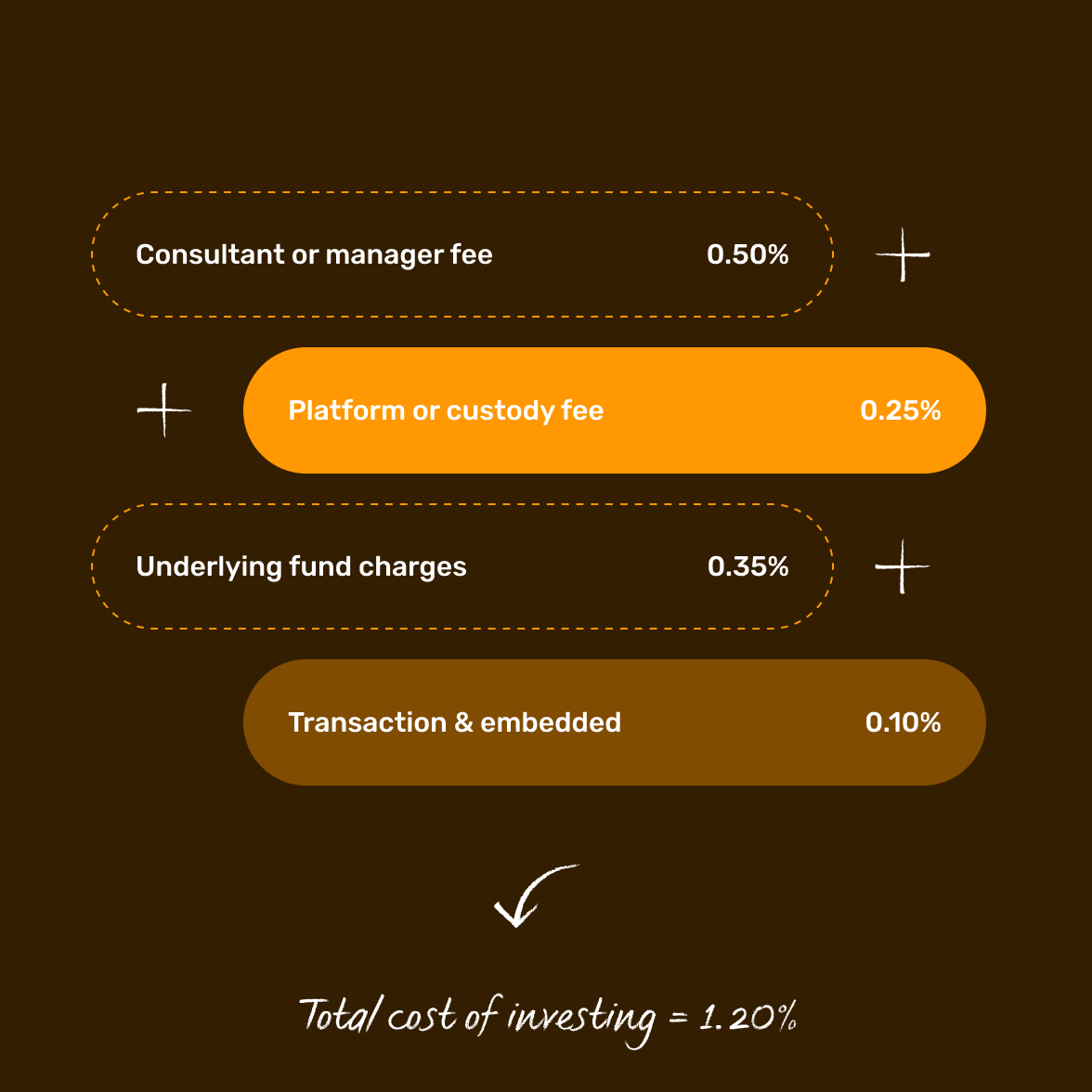
The total cost of investing is rarely one number. It is the sum of at least four layers, each charged by a different party, on a different basis, and each capable of varying between one arrangement and another. The same four layers apply whether investments are made into funds on an advisory basis with an investment consultant, or on a discretionary basis directly with an investment manager running a segregated portfolio. The layers differ in name only depending on the structure. Trustees who compare only one layer, typically the consultant or manager fee, are not making a like-for-like comparison, whatever the quoted figures suggest.

Layer What it covers
Consultant or manager fee What is paid to an investment consultant for advice, or to an investment manager for running the mandate directly, usually a percentage of assets.
Platform or custody fee What is paid to the institution holding and executing the investments, often a flat percentage separate from the consultant or manager fee.
Underlying fund charges Where the arrangement invests in funds, directly or through a segregated portfolio, those funds carry their own separate charge on top.
Transaction and other embedded costs Dealing costs, performance fees and how any securities-lending revenue is treated, rarely itemised on a standard statement.

These layers compound rather than substitute for one another. A low consultant or manager fee sitting on top of expensive, actively managed funds with high embedded costs can produce a higher total cost than a slightly higher fee on an efficiently priced fund range. The only reliable comparison is the sum of all four layers, expressed as a single all-in figure, at the same point in time.

A worked example makes the point concrete. A 0.50% consultancy fee sitting on top of actively managed funds averaging 1.20% in embedded charges carries a materially different total cost to the same 0.50% fee sitting on a passive-leaning range averaging 0.35%. The consultancy fee alone tells a trustee almost nothing about which arrangement actually costs more.

demystifying-fees-total-cost-of-investing@2x

Consequences of getting it wrong

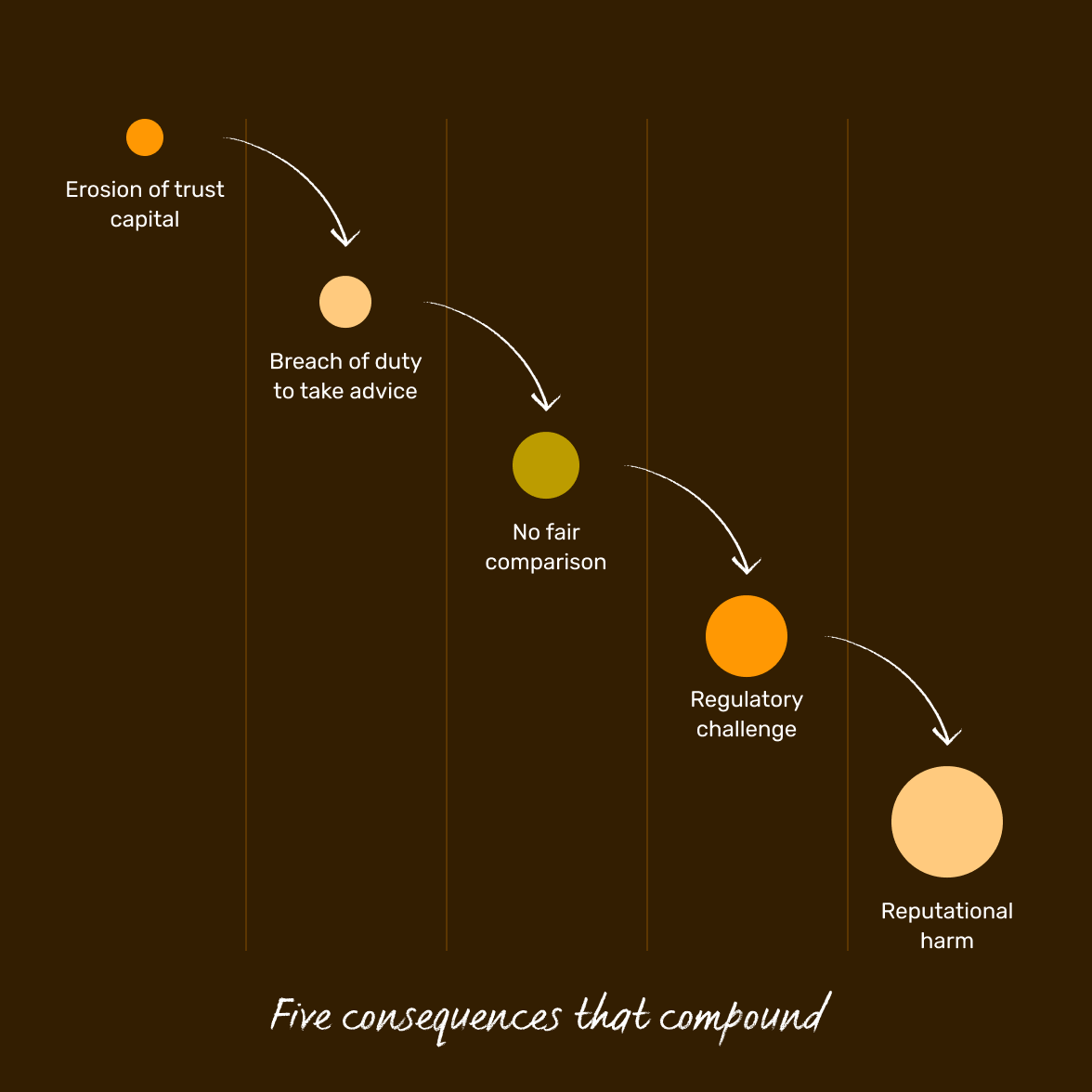
These consequences compound rather than substitute for one another, in the same way the cost layers themselves do. A trustee who cannot evidence a clear view of total cost is exposed on more than one front simultaneously.

Consequence What it means for a trustee in practice
Erosion of trust capital Small, persistent percentage differences in total cost compound over a multi-decade horizon and directly reduce what beneficiaries ultimately receive.
Breach of the duty to take proper advice Advice is only impartial if it is not shaped by how the consultant is paid, and undisclosed or bundled charges make that impossible to test.
Inability to compare arrangements fairly Bundled or partially disclosed charges make one consultant’s proposal impossible to compare honestly against another’s, undermining the trustee’s own decision-making.
Regulatory and beneficiary challenge An inability to produce a clear, itemised cost breakdown on request invites scrutiny a trustee cannot answer, after the fact rather than before it.
Reputational harm Explaining costs after a beneficiary or regulator raises the question is a materially worse position than showing they were transparent from the outset.

Cost is judged over the life of the portfolio, not at the point of appointment. An arrangement that looked competitively priced at the outset can still expose a trustee years later if embedded costs were never revisited. The standard a professional trustee is held to is also higher than that applied to a lay trustee. A professional trustee is expected to have the means to test cost claims that a lay trustee might reasonably take on trust.

demystifying-fees-five-consequences-that-compound@2x

How Select closes the gap

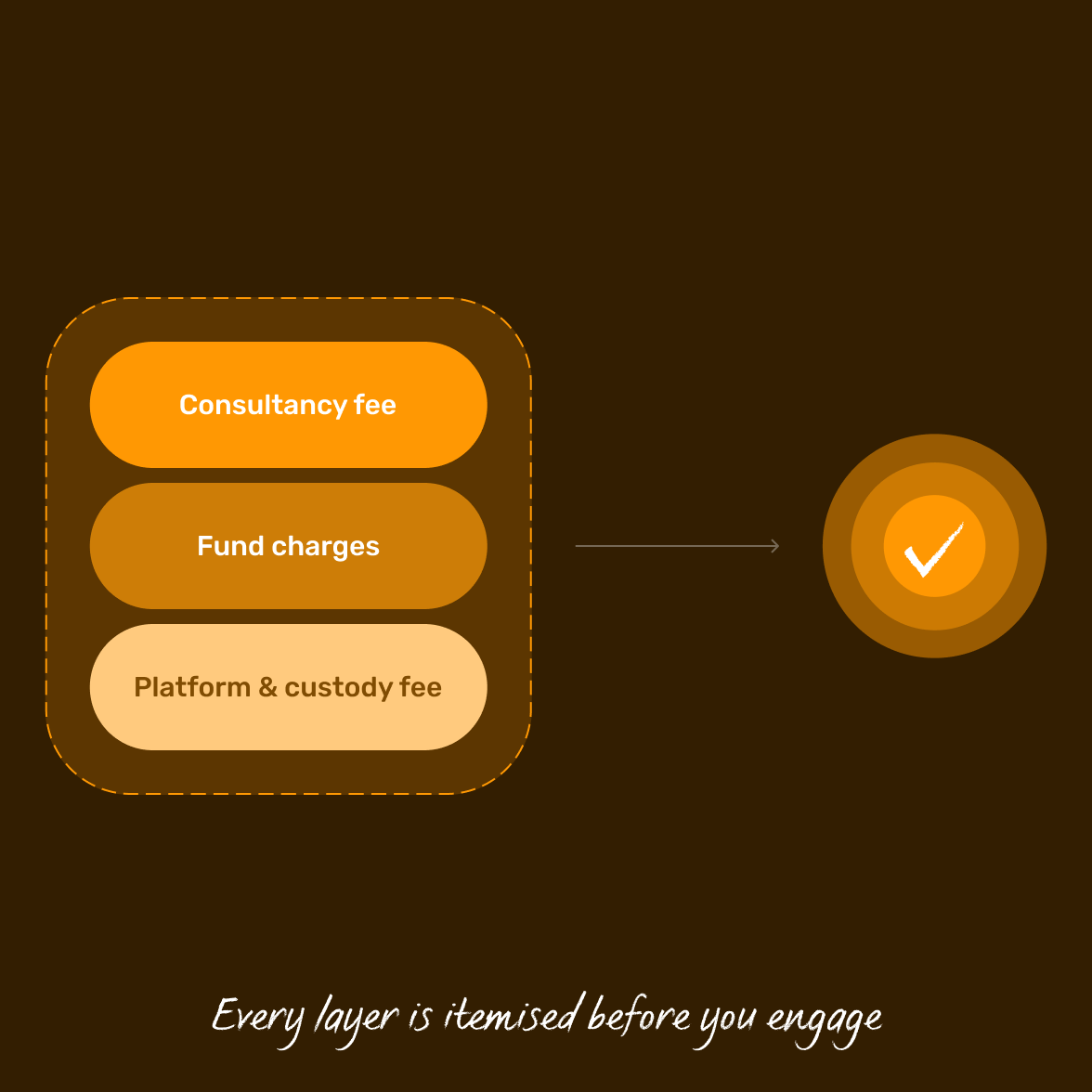
Select, Enhance’s manager selection and investment consultancy service delivered by Enhance Wealth Consultancy Limited (EWCL), is built around a single, tiered consultancy fee rather than a set of separately negotiated charges. The fee is applied on a family-group basis. A family with multiple entities using Select benefits from the combined economies of scale of the whole relationship, rather than each entity being tiered separately. The tiering also steps down as the family group’s assets grow, rather than staying fixed.

That single fee already includes Monitor review reports and Connect platform access for the trustee and family members associated with each client group. There is no separate monitoring fee and no separate platform-reporting charge layered on top. In addition to the consultancy fee, clients pay a flat percentage platform fee and modest administration charges levied by the Swiss private banking partner for custody and execution. Centralising assets on a single platform also gives the family group access to competitive lending, cash management and foreign exchange terms it would not get spread across several custodians. A detailed fee estimate, itemising every layer including underlying fund management charges, is provided before Enhance is engaged.

Cost discipline also runs through Select’s manager research. The Price pillar of the 5P research framework tests every fund’s fee against its peer-group median. It also examines the embedded costs a headline fee can mask, including transaction costs, any underlying fund charges, and how securities-lending revenue is treated and shared. Where Select clients’ aggregated assets give Enhance genuine negotiating scale with a manager, the Investment Committee uses it to negotiate more competitive terms, while ensuring the manager remains appropriately incentivised.

Where a trustee holds, or is considering, a segregated mandate with a manager outside the platform, the same fee-transparency test applies. Connect gives the Investment Consultant visibility of that mandate too, so the same all-in cost discipline can be applied in an advisory capacity, not only to Select’s own fund universe.

Trustees evaluating any fee arrangement, not only Select’s, should ask the same three questions. Ask for a single, itemised estimate before you engage, not a headline figure with the rest to follow. Ask whether it is tiered on a family-group basis or per entity. Ask directly whether monitoring and platform reporting are included, or charged again on top of the headline fee.

Select requires a minimum investment of £1m, assessed on a family-group basis rather than per entity. Enhance will consider exceptions, though, where a broader trustee relationship or an expected future liquidity event makes that appropriate.


demystifying-fees-every-layer-is-itemised-before-you-engage@2x

The bottom line

The Trustee Act 2000 frames the question in two ways. Section 1’s statutory duty of care requires trustees to exercise reasonable skill and care, which includes managing cost prudently. Section 5’s duty to take proper advice requires that the advisor is qualified by practical financial experience, not shaped by how the consultant is paid. Beneficiaries will test both in the return they actually receive, and, for professional trustees, regulators will enforce them.

Trustees who take the total cost of investing seriously need more than a headline fee they can quote with confidence. They need a single, itemised view of every layer of cost, revisited over the life of the arrangement rather than fixed at the point of appointment. That view should be available on request to a board, an auditor or a regulator, without having to reconstruct it after the fact.

Select is built to give trustees that view from the outset, and to keep it current. That means a single tiered fee, itemised before engagement, with no double charging and no commissions or retrocessions to obscure where the money actually goes. Cost transparency is not a feature layered onto the Select model. It is the model.

Enhance_Playbook_Select_Demystifying_Fees-small
Resource Category 🟢-2

Playbooks

for trustees

Download this Select Playbook for trustees.

select-factsheet-cta-mobile

News, Peer Groups and Market Data

Sign-up for the latest news and insights from Enhance, delivered direct to your inbox.

Icon x 4 🟢