Resource Category 🟢-2 Playbooks

How to select a portfolio monitoring provider and the risks to trustees of getting the appointment wrong

For trustees
monitor-provider-cover-@2x
Resource Category 🟢-2

Playbooks

for trustees

This playbook is a plain-English guide for trustees. It covers the five tests a trustee should apply when appointing a portfolio monitoring provider, the consequences of getting the appointment wrong, and how independent portfolio monitoring, delivered through a purpose-built investment governance platform, discharges trustee investment duties fully.

Appointing a portfolio monitoring provider is itself a governance decision. The provider becomes the trustee’s independent eyes on every investment manager, every portfolio and every client. Its findings will be scrutinised by boards, auditors, regulators and, where things go wrong, courts. Most trust companies have a well-developed process for selecting investment managers. Far fewer have an equivalent framework for selecting a monitoring provider.

From the outside, the market looks uniform: every provider promises independent benchmarking and regular investment reporting in a pre-agreed format. Underneath, providers differ in how they earn their revenue, what their service delivers, the scope of the oversight framework and whether investment-qualified expertise and support augment the reports and technology provided. This playbook is designed to help trustees cut through all the noise and make the right appointment.

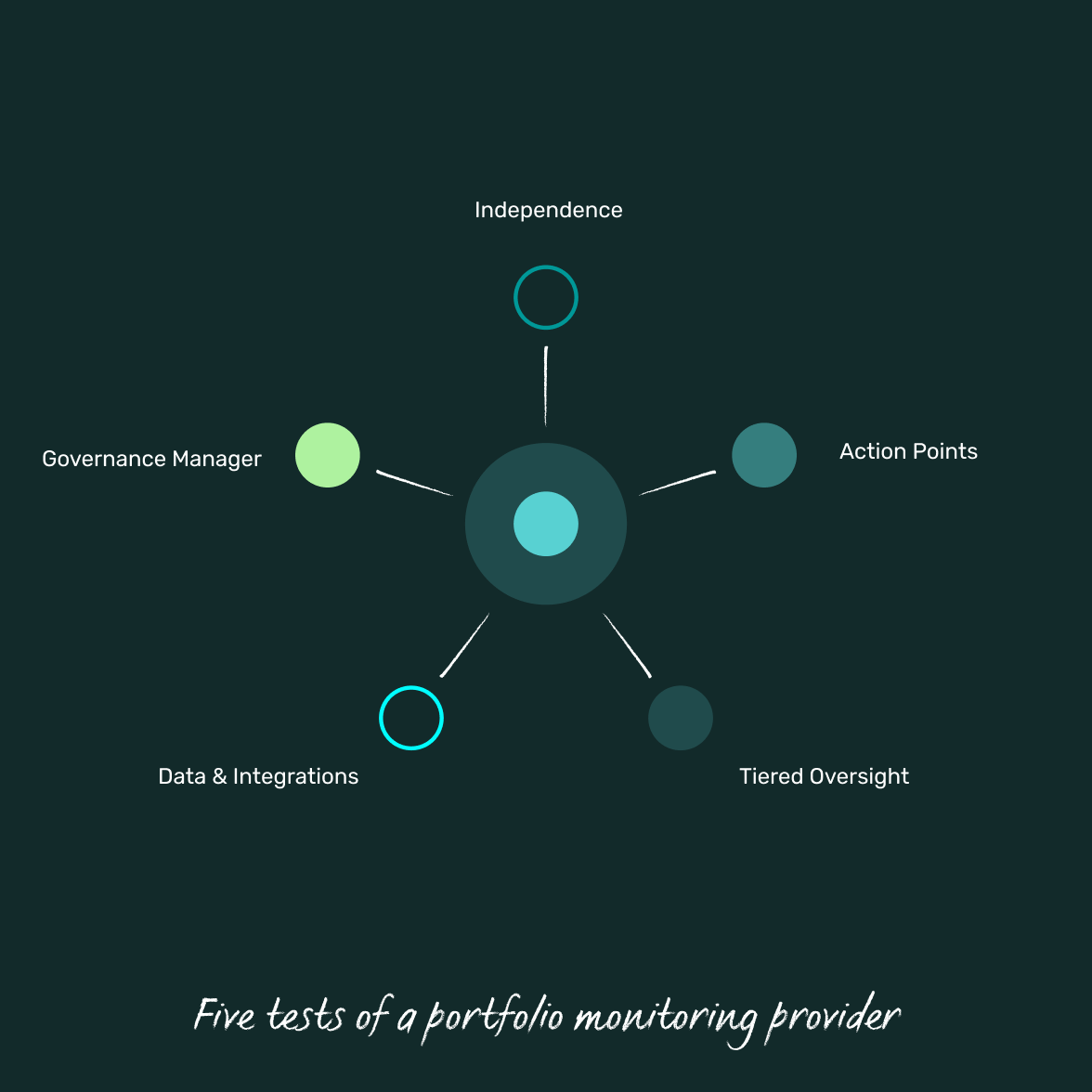
Five tests of a portfolio monitoring provider

The five tests below cover the questions a trustee should put to any monitoring provider before appointment, and to an incumbent provider at every service review. They are deliberately practical. Each can be answered with evidence: a written confirmation, a sample review, a platform demonstration or a named individual.

monitor-provider-five-tests-@2x
Test 01

Independence from investment managers

No revenue from the investment managers under review: no peer-group subscriptions, no research coverage fees, no referral arrangements.

Test 02

Mandate compliance checks and action points

Every review tests the portfolio against its mandate, and findings become categorised action points tracked with a full audit trail.

Test 03

Tiered oversight from portfolio to practice

Reviews aggregate from portfolio to client to practice level, matching each tier of trustee responsibility and risk.

Test 04

Data and integrations that drive efficiencies

Investment data is accessible and flows into trust administration and accounting systems without re-keying.

Test 05

A named Governance Manager, not just tech

A qualified, experienced individual stands behind the reports and supports the trustee’s governance process.

The first test is the one that is most often overlooked, because the revenue models that fail it are rarely advertised. The remaining four are easier to check, and just as consequential. A provider can be perfectly independent and still deliver reviews that lack depth and actionable insight, stop at portfolio-level monitoring, lock the associated data away or do not provide investment-qualified governance support. Any failure is problematic for trustees seeking to discharge their investment responsibilities.

Why independence is the test that decides the others

A monitoring provider exists to tell trustees things investment managers may prefer not to highlight: that a mandate has been breached, that performance has lagged after fees, that a portfolio’s risk has drifted from the policy and so on.

A provider that earns revenue from those same managers is being asked to criticise its own paying customers. The conflict does not depend on bad faith. Over thousands of findings across hundreds of portfolios, the commercial pull shapes what is flagged, how firmly it is worded, and whether a poor rating or conclusion follows.

Manager-derived revenue takes three common forms and, across the wealth management industry, some established peer-group and research businesses rely on all of them.

Group 🟢
01

Peer-group participation subscriptions, where managers pay to be included in the comparator the trustee relies on, skew the sample toward those who pay and give the provider an income stream from the very firms being compared.

Bigtop Updates 🟢
02

Research coverage fees, where a manager pays to be rated or covered by a provider to secure third-party validation and marketing exposure, link the provider’s revenue to its own subject matter.

Chat Bubble 🟢
03

Referral arrangements, where the provider is paid for introducing trustee clients to particular managers or advisers, give it a direct commercial interest in the conclusions of its own reviews.

A trustee should ask any monitoring provider to confirm in writing that none of these applies to their business model. An unqualified answer is easy to give if it is true. Trustees already understand this pattern in advice: an adviser paid by a product provider or selling in-house solutions is not impartial or independent, however professional the individual. The same logic applies to portfolio monitoring providers.

The consequences of getting the appointment wrong

Choosing a monitoring provider that fails these tests is not a neutral procurement decision. The consequences fall into five broad categories, and they compound rather than substitute for one another.

monitor-provider-wrong-appointment-@2x
Consequence What it means for a trustee in practice
Compromised evidence A review produced by a provider with revenue ties to the managers it covers cannot be presented to a beneficiary, a court or a regulator as impartial. The trustee’s strongest piece of evidence, the independent review, is weakened at exactly the moment it is needed most. 
Unproven reviews Reports without categorised action points and an audit trail leave the duty to review unevidenced. The trustee may have read every report carefully, but cannot easily or consistently demonstrate what was identified, what was considered, what was decided, and when as a result of the report received.
Blind spots above portfolio level Portfolio-only reporting hides the fiduciary risks that sit at client and practice level: aggregate unsuitability across a client’s accounts and firm-wide manager and position exposures that no individual portfolio review can reveal create a governance gap that will concern regulators.
Manual cost and data risk Where the provider’s data cannot flow into trust administration and accounting systems, every calculated data point, valuation and transaction must be re-keyed by trust company staff. The cost recurs every quarter, and every manual step is an opportunity for human error.
Oversight without ownership A report with no qualified individual standing behind it is rarely properly understood or appropriately interrogated. Findings go unexplained, questions go unanswered, and the governance value of the engagement decays until the quarterly report becomes a filing exercise. 


Two features of this decision are worth underlining

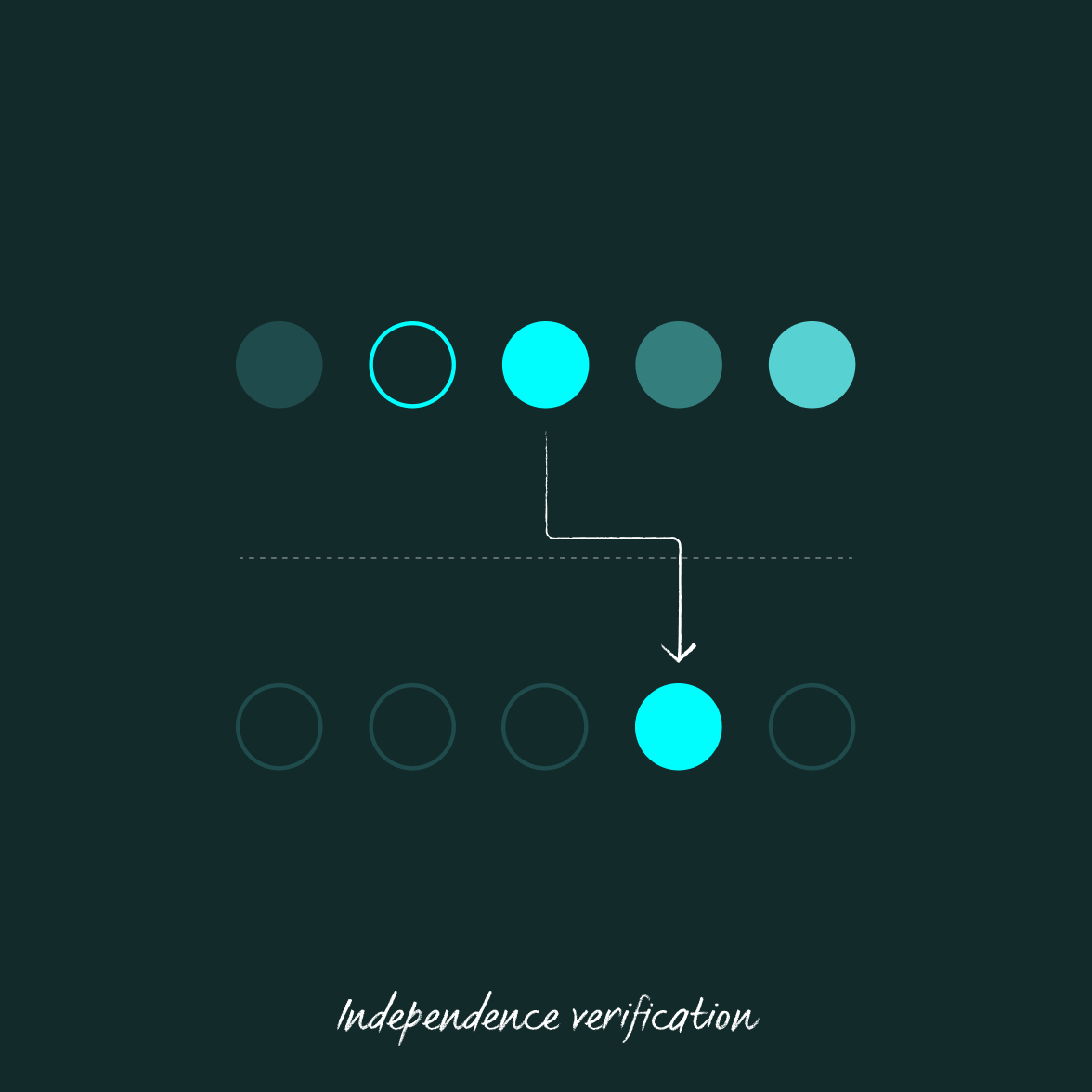
Independence can be verified before appointment

Ask the provider to confirm in writing that it receives no revenue from investment managers in any form: no peer-group participation subscriptions, no research coverage fees, no referral or introduction payments. A provider that is independent will answer in one sentence. A qualified or carefully worded answer is itself the finding, and it should be recorded alongside the rest of the selection diligence.

monitor-provider-verification-@2x

The appointment is judged like every other trustee decision

Selecting and retaining a monitoring provider falls under the trustee’s ordinary duty of care, and the standard is higher for professional trustees. A trustee who discovers, after the event, that its monitoring provider was part-funded by the managers under review will face an uncomfortable question: what diligence was done at appointment? Applying the five tests, and recording the answers, is that diligence. The tests apply equally at every subsequent service review, because the appointment, like the portfolios it oversees, is judged across its full life.

How Monitor and Connect pass the five tests

Enhance was founded in 2005 to deliver investment governance services exclusively to trustees, family offices and charities. Our flagship service, Monitor, is a comprehensive portfolio monitoring service, delivered by CISI-qualified Governance Managers using our purpose-built governance platform, Connect.


Independent of investment managers, by design

Enhance receives no revenue from investment managers. There are no peer-group participation subscriptions: Enhance Peer Groups are calculated from real portfolios that Enhance already monitors for trustees, and the managers behind them do not pay and are not named. There are no research coverage fees and no referral arrangements. The fee paid by the trustee is the only revenue Enhance receives from the engagement, which means every finding, every rating and every action point is produced for one audience: the trustee.

Mandate compliance and action points, every quarter

Monitor’s review framework checks compliance with the portfolio’s investment policy, compares returns and risks against a range of independent benchmarks over multiple timeframes, and summarises risk-adjusted performance through a proprietary 1-to-5 Enhance rating. The questions answered are the trustee’s questions: is this portfolio suitable, is it diversified, is it performing in line with its investment mandate? Findings are surfaced rather than buried in prose.

Every review generates action points in three categories (suitability, technical and administration), each tracked through its full lifecycle inside Connect to produce a date-stamped audit trail of what was identified, what was considered, what was decided, and when. That audit trail is exactly the evidence a beneficiary, a regulator or a court would expect a trustee to be able to produce. Surfacing a historic investment report that does little more than assess performance does not protect trustees.

Portfolio, client and practice-level oversight

Portfolio reviews aggregate into client-level reviews covering all investments held for a single client group, and into practice-level reviews that give management and boards global oversight of every portfolio under the trust company’s responsibility. Each tier answers the question that belongs to it. Is the manager doing what we asked? Taken together, are these investments still right for the client? And where does investment risk sit across the whole book?

Your data, working in your systems

Connect is the digital hub that brings everything together: interactive dashboards, flexible reporting templates, workflow tools and bookkeeping data. Investment data can flow into leading trust administration and accounting systems through Connect’s native integrations and API, removing the re-keying that consumes trust company staff time each quarter. Connect is included free with Monitor and gives trustees, boards, risk and compliance teams, auditors and regulators a single source of truth for the investment data and review outputs behind every governance decision.

A Governance Manager at the trustee’s side

Monitor includes a dedicated Governance Manager: an industry-experienced, CISI-qualified resource assigned to your trust company. Your Governance Manager hosts the periodic practice review, walking the trustee through the prior quarter’s action points and Enhance’s specific portfolio observations, attends Investment Committee meetings where relevant, and is available between reviews for ad-hoc questions. The support is included in the standard fee, with no separate retainer and no hourly billing. They are an investment professional who sits on your side of the table.

How the five tests map to Monitor

Monitor is not a substitute for trustee judgment. It gives trustees the independent information, the structured review process, and the documented record they need to exercise that judgment properly, and to prove they have done so. Independence is built into Enhance’s fee model. Mandate compliance checks turn each quarterly review into evidence through tracked action points. Tiered reporting matches each level of trustee responsibility. Data and integrations put the outputs to work across the trust company's systems. And a named Governance Manager stands behind all of it, every quarter.

The bottom line

The selection of a monitoring provider deserves the same care as the selection of an investment manager, because the monitoring provider is the trustee’s main line of defence when an investment manager falls short. Five tests separate monitoring that protects trustees from monitoring that merely reports to them: independence from investment managers, mandate compliance checks with tracked action points, tiered oversight at portfolio, client and practice level, open access to data and integrations, and a named Governance Manager. A provider should be able to evidence all five before appointment, and an incumbent at every service review. Monitor and Connect were built to pass every test.

Monitor_Provider_15.06
Resource Category 🟢-2

Playbooks

for trustees

Download this Monitor Playbook for trustees.

monitor-factsheet-cta-mobile

News, Peer Groups and Market Data

Sign-up for the latest news and insights from Enhance, delivered direct to your inbox.

Icon x 4 🟢